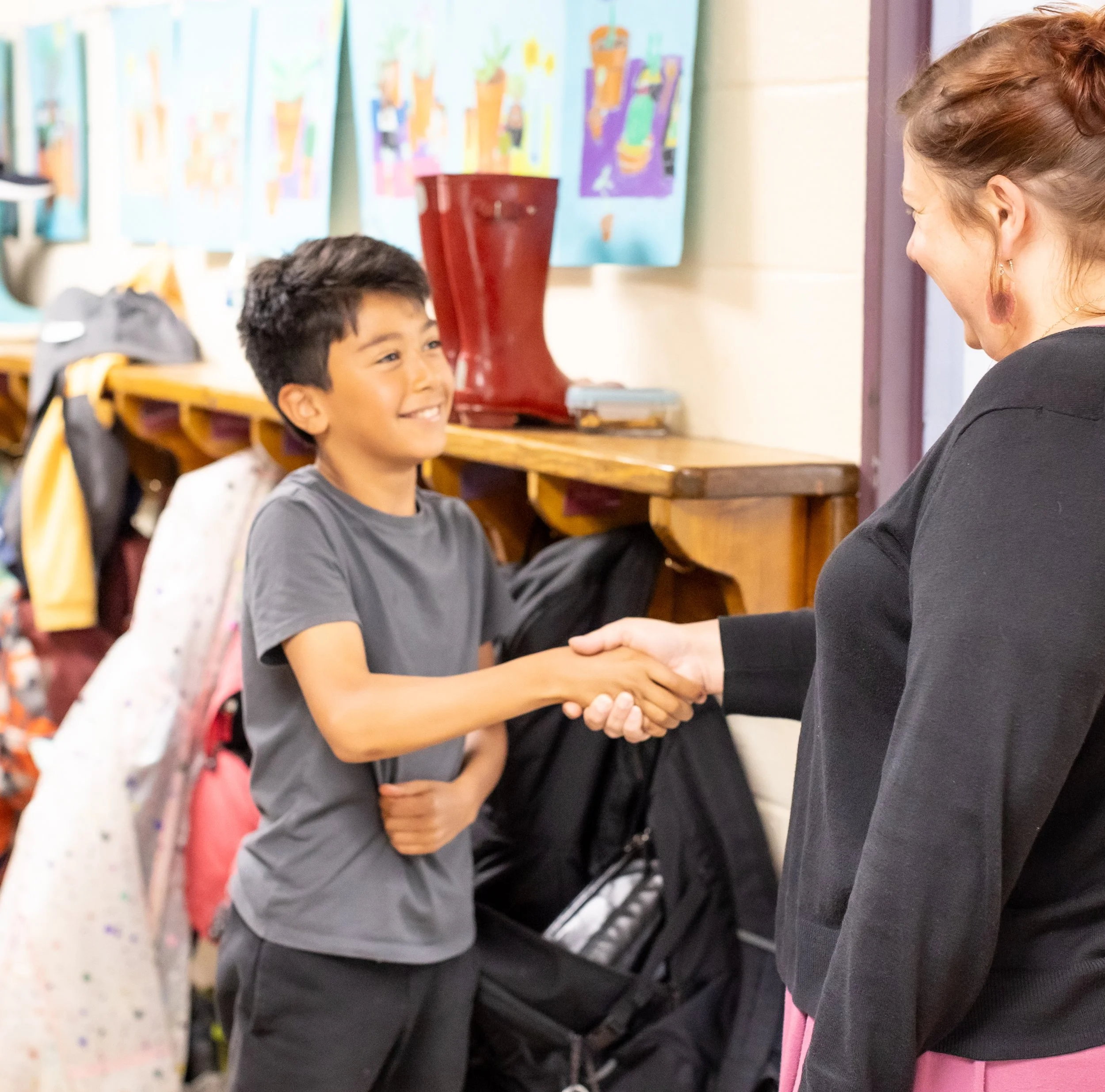
Learn about our elementary school curriculum
Grade 1
A Year of Wonder
Waldorf curriculum meets first graders with stories, rhythm, and beauty…
keeping their sense of awe alive as they take their first steps beyond early childhood. Letters and numbers are not simply introduced—they are discovered through imaginative stories, nature experiences, movement, and artistic exploration. In this way, reading, writing, and arithmetic unfold with excitement and curiosity rather than pressure, allowing academic foundations to grow from a genuine sense of wonder.
It’s a time when wonder becomes the child’s greatest teacher.
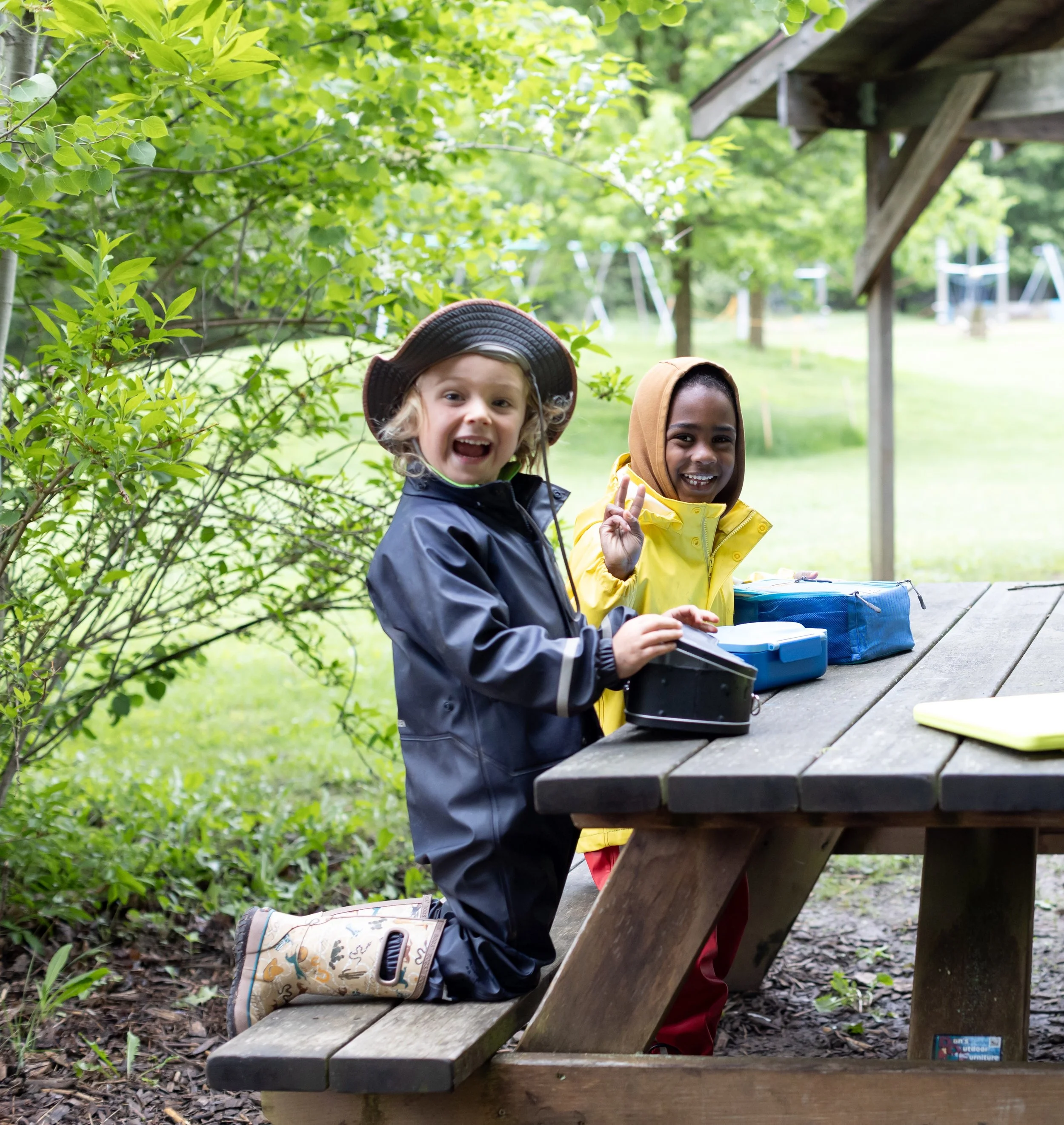
Students sing, play the pentatonic flute, paint in watercolor, and shape beeswax. They begin Spanish and German, building confidence, cultural awareness, and creative expression.
Music, visual art, and world languages are part of everyday learning.
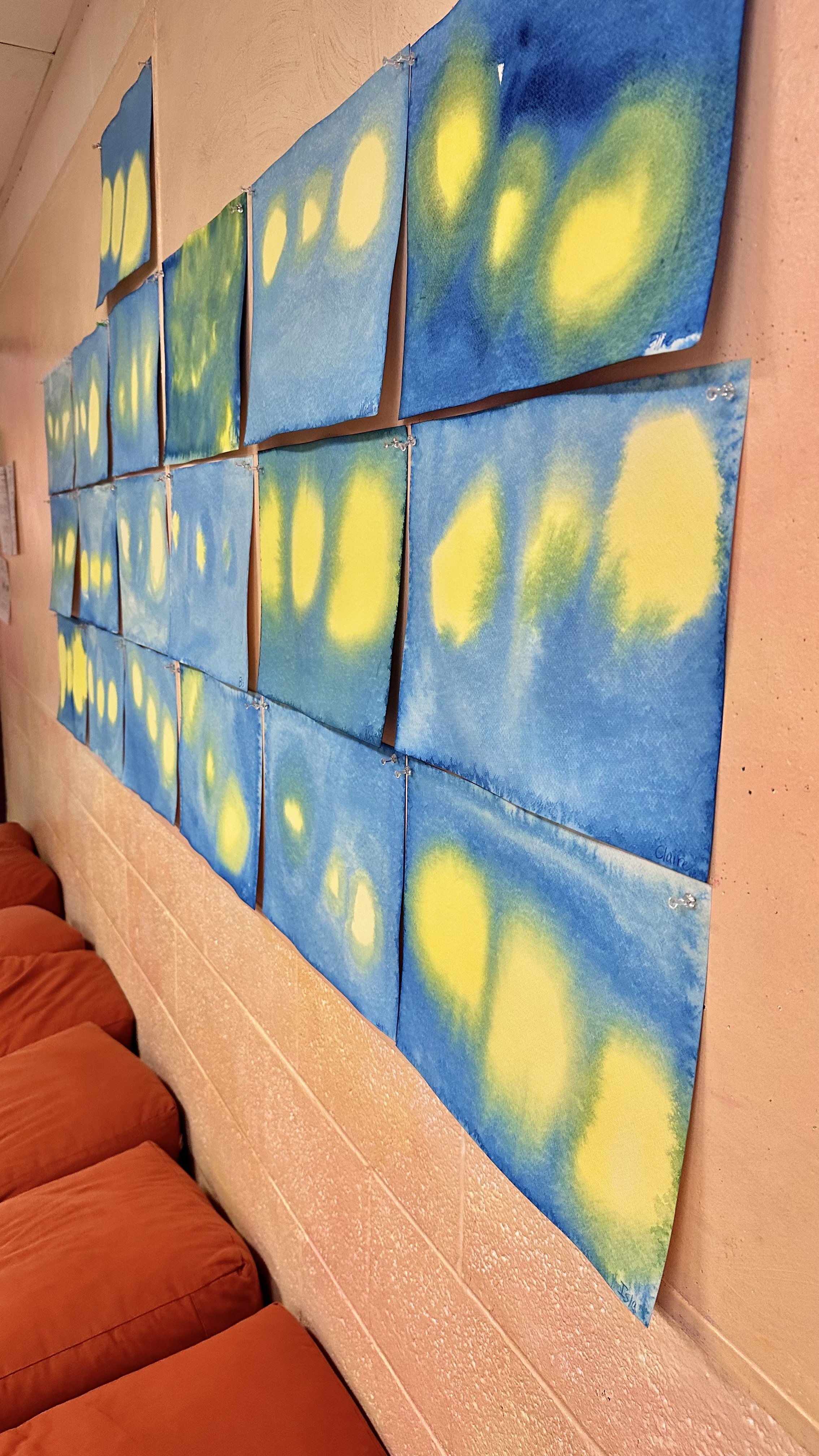
Every element of classroom life honors their inner spark.
Children delight in morning walks filled with discoveries in the natural world, watercolor paintings that reveal how colors “play” together, beeswax figures shaped from stories, and recorder tones that feel as magical as they sound. Social-emotional work, circle games, handwork, sharing time, and free creative projects deepen friendships and confidence, helping each child experience the wonder of connection—with themselves, with others, and with learning.
First grade nurtures wonder while laying strong foundations for joyful, engaged learning.
Grade 2
Morality and Development of Character
Inspiring biographies awaken admiration for courage and kindness in second graders…
while animal fables reveal imperfections with humor — showing that mistakes, cleverness, and mischief are also part of being human. Through these vivid narratives, students begin to recognize both their higher ideals and their everyday challenges. Children explore the question of right and wrong through stories rather than rules.
They build an inner sense of right and wrong that grows from experience, not lecture.
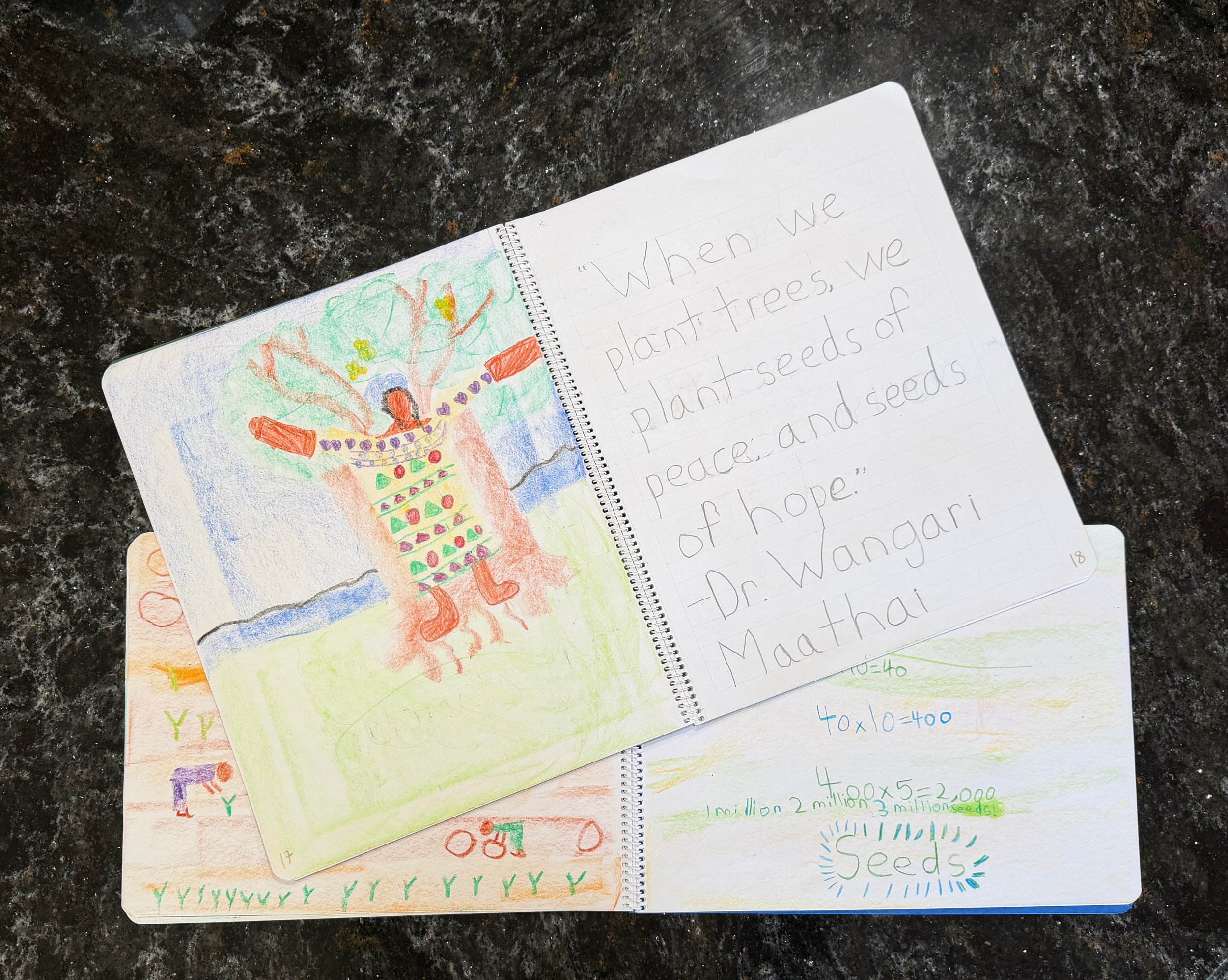
Reading and writing flourish
through small-group work in reading, phonics, and poetic language. Math incorporates real-world exploration as students strengthen the four processes, learn place value, tell time, work with money, and discover patterns in the times tables.
Math is brought to life through physical activity, rhythm, and stories.
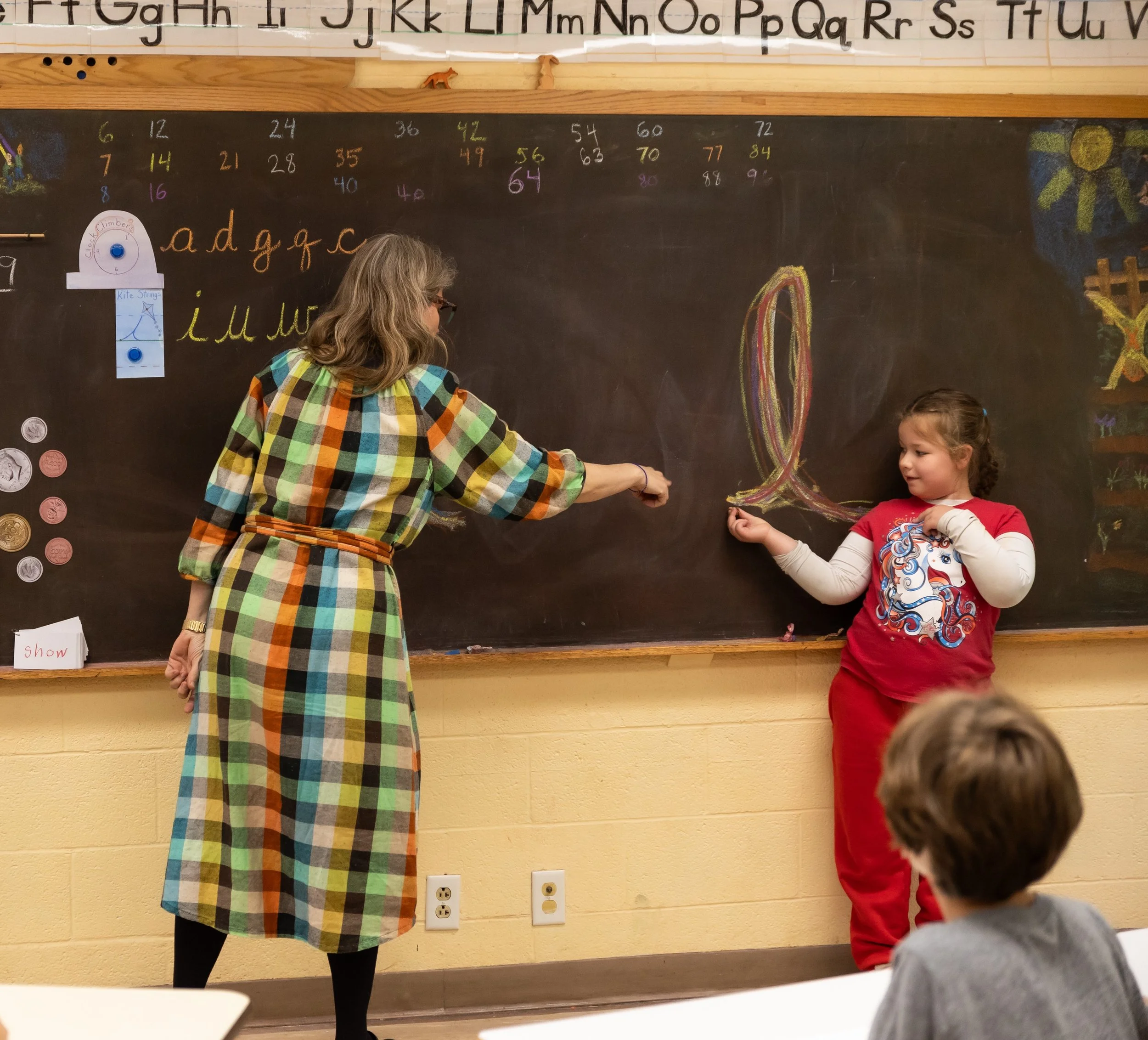
Students develop perseverance and confidence through making meaningful items with their own hands.
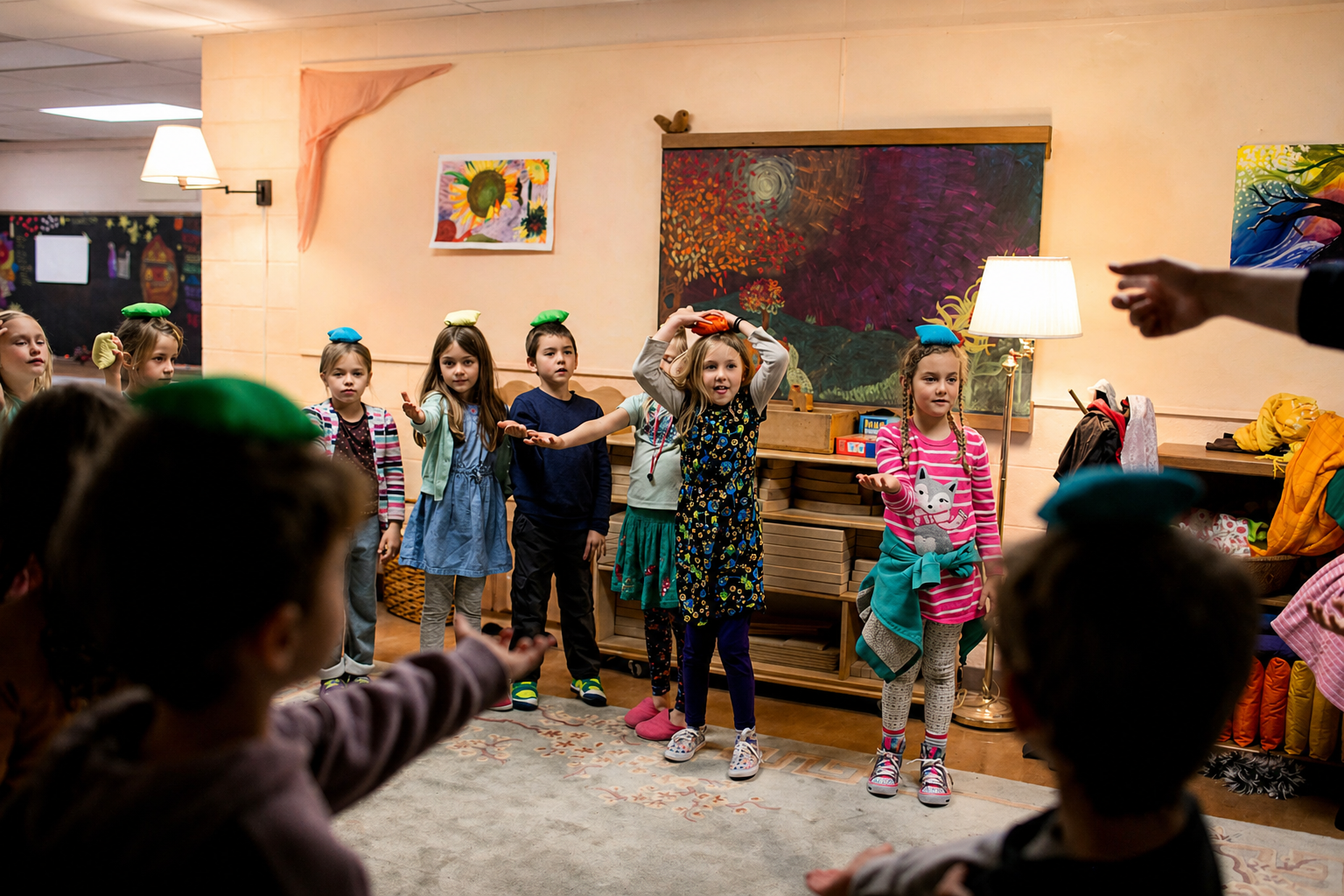
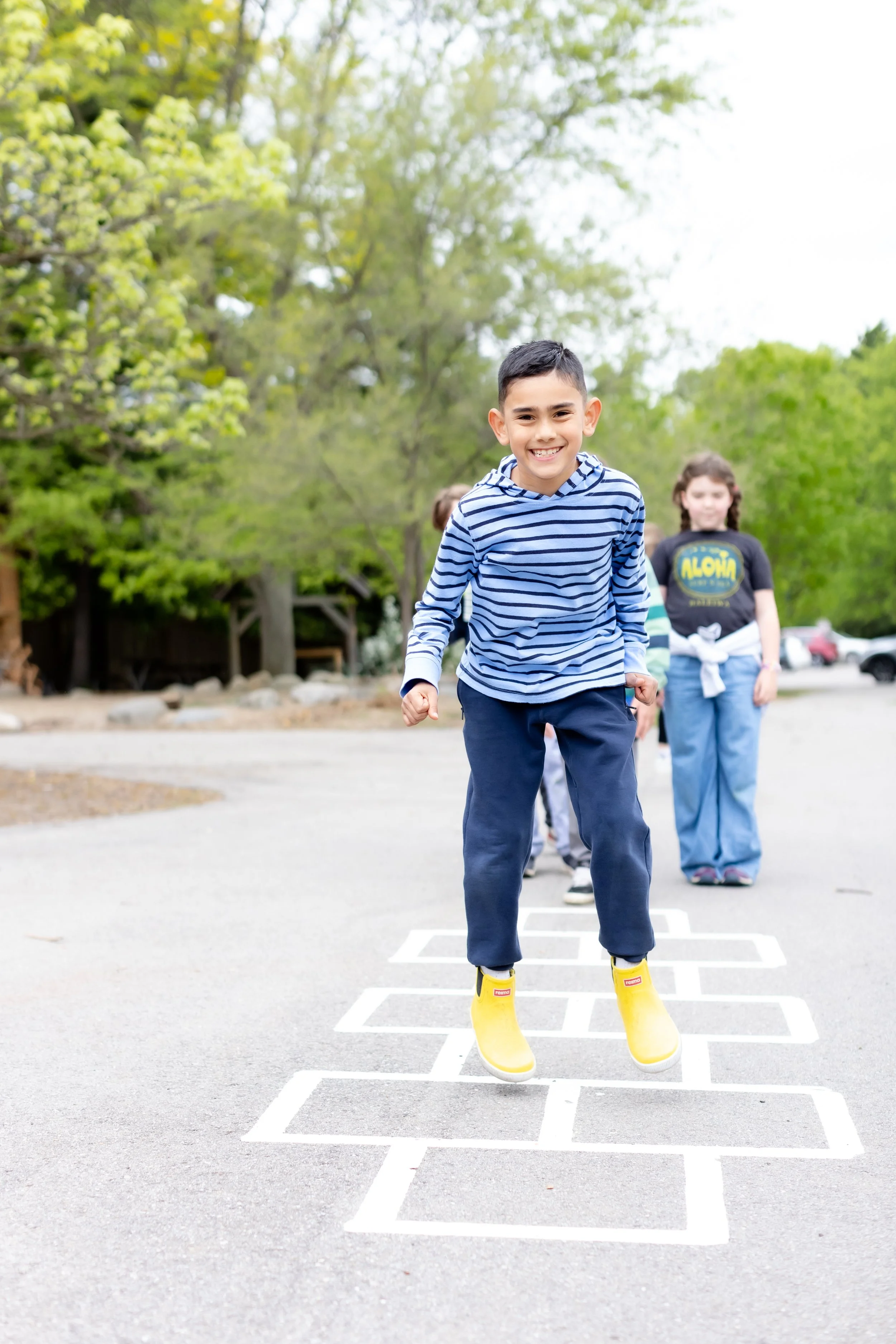
Artistic and practical work enrich every week—handwork strengthens fine motor skills, form drawing builds focus and spatial awareness, singing and recorder nurtures breath and musicality, and watercolor painting invites emotional expression and a sense of beauty. Joyful group games build cooperation, and students plant seeds they will harvest in third grade, connecting them to nature’s rhythms.
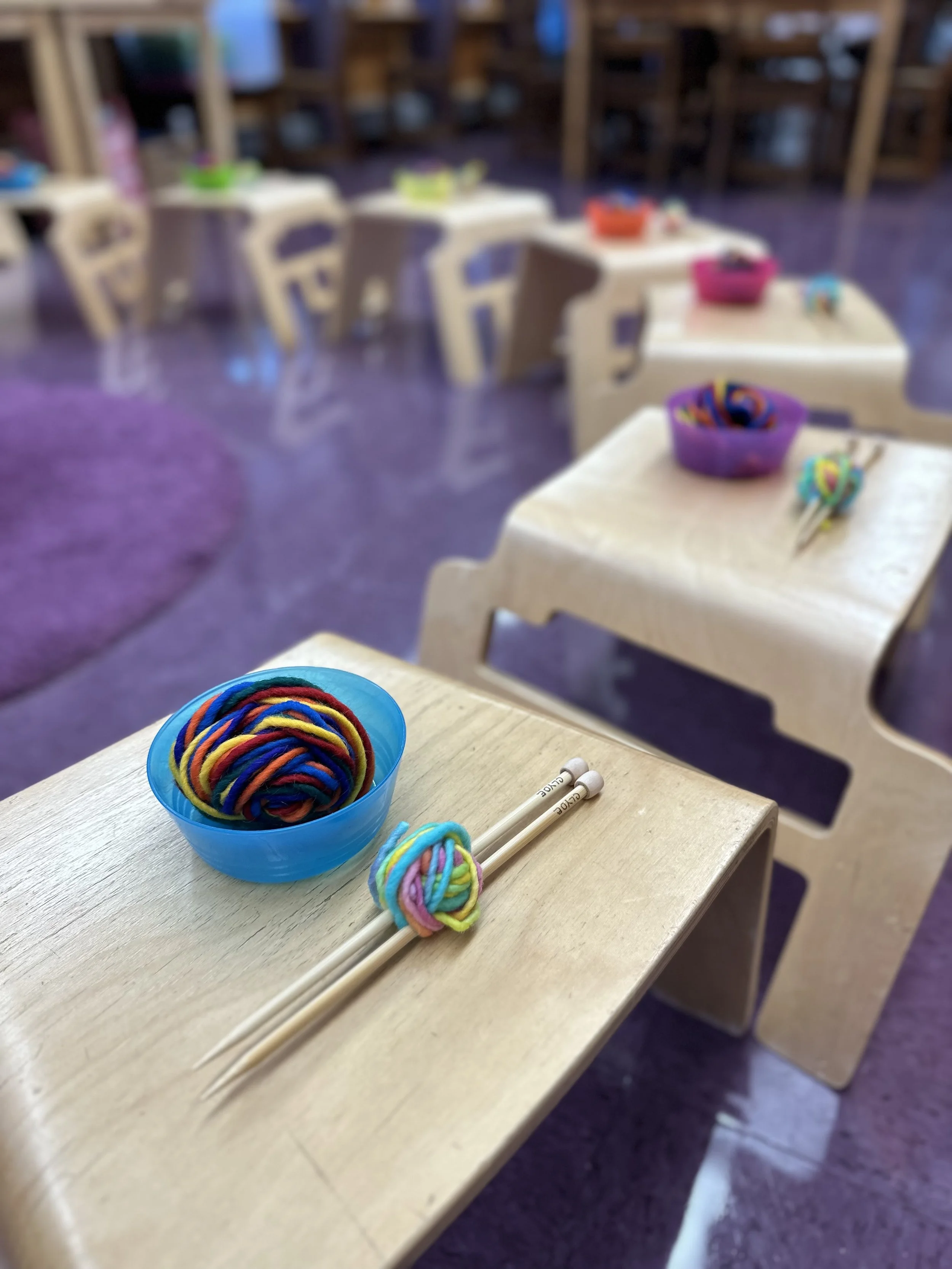
Learning feels purposeful, creative, and connected…
throughout second grade, supporting children to grow in independence, curiosity, and a lifelong love of learning. Second grade is a warm, imaginative, and skill-building year.
Children grow more capable, curious, and confident in themselves and their learning.
Grade 3
A Year of Building Independence and Capability
Third grade is a time when children begin to step into their own self…
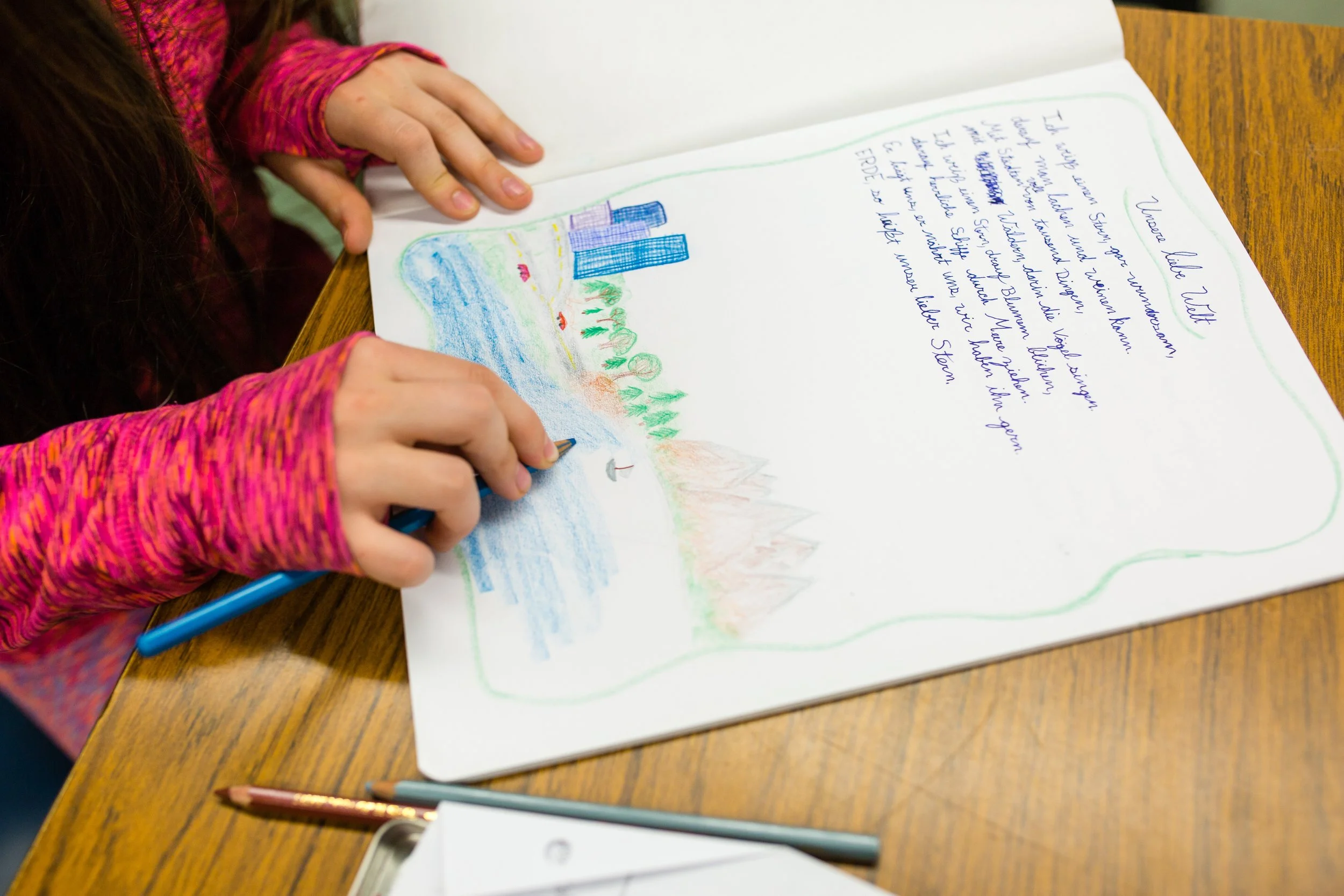
and naturally start to ask, “Where do I fit in this world?” This is a pivotal year in Waldorf education, and the curriculum meets this developmental moment by helping students experience their own growing independence. They study the Hebrew Bible and Native American creation stories, grammar adventures, shelter-building, and practical life skills in farming and fibers.
Students see how human beings shape their surroundings — and, most importantly, how they can do the same.
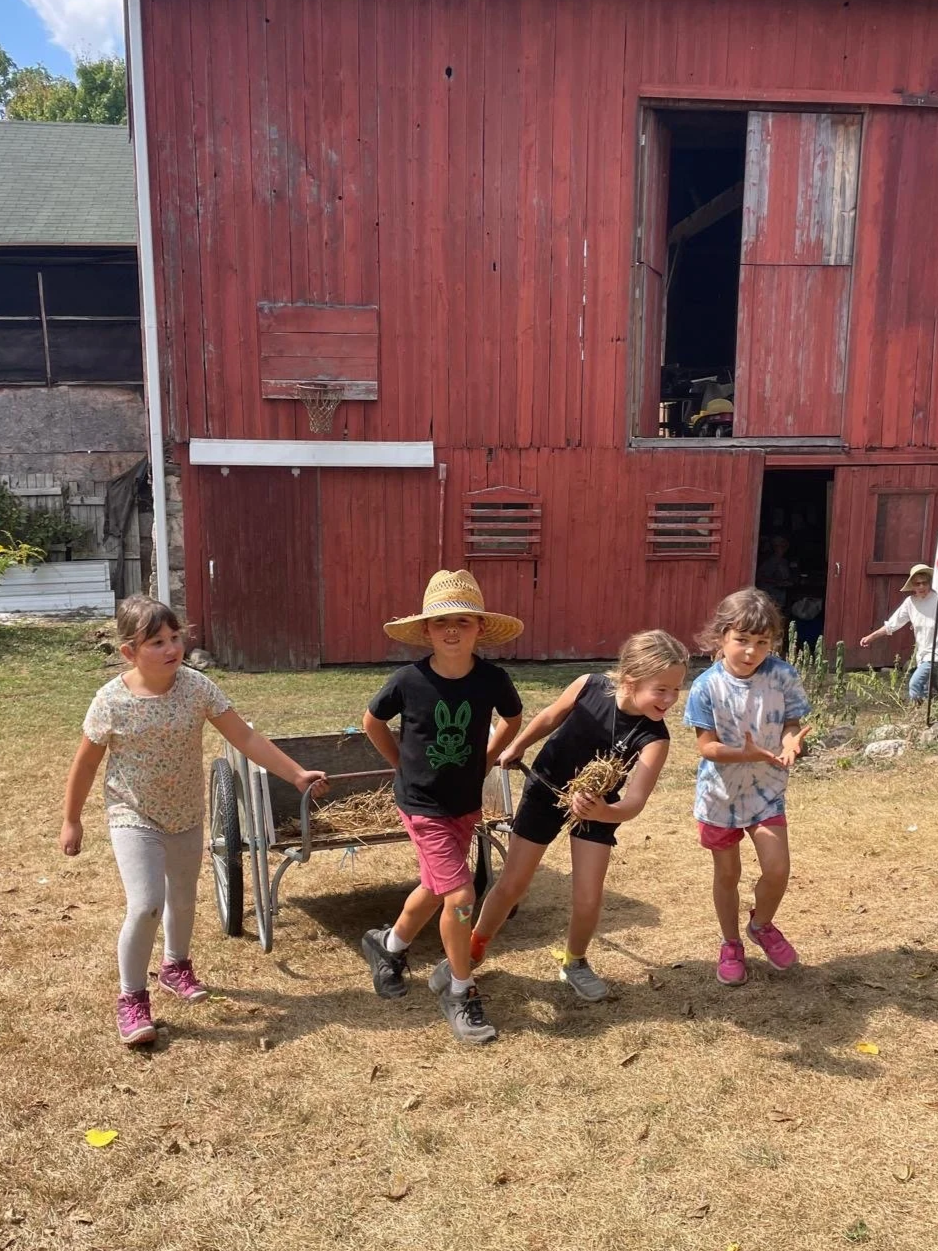
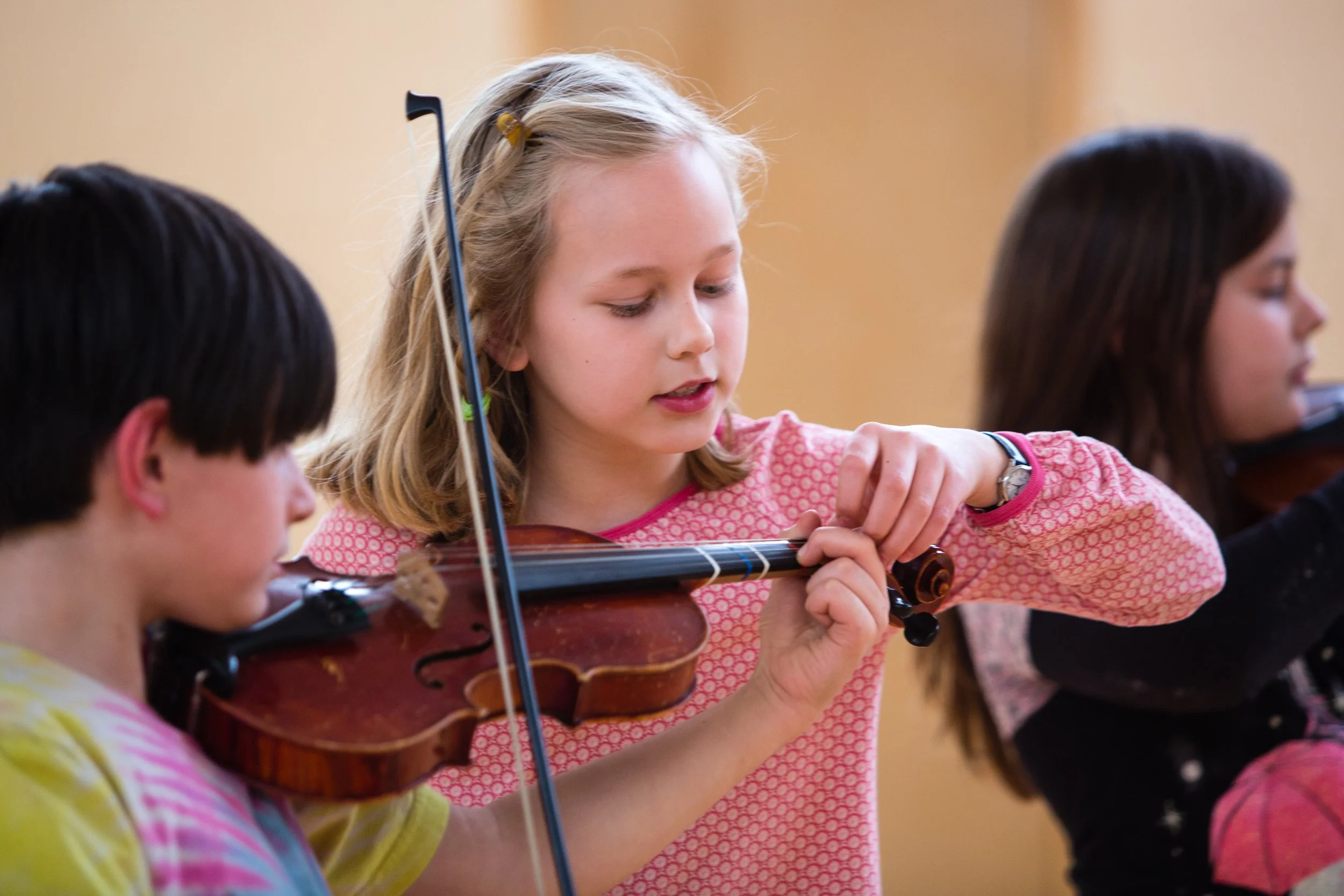
Students measure the world around them, bake, garden, weave, build shelters, plow a field on a working farm, and begin formal study of the violin or another string instrument.
Learning becomes more hands-on, purposeful, and increasingly self-directed.
In academics, they take on more responsibility as writers, readers, mathematicians, musicians, and actors — rehearsing and performing a class play, keeping spelling work organized, and creating their own multiplication and division tables.
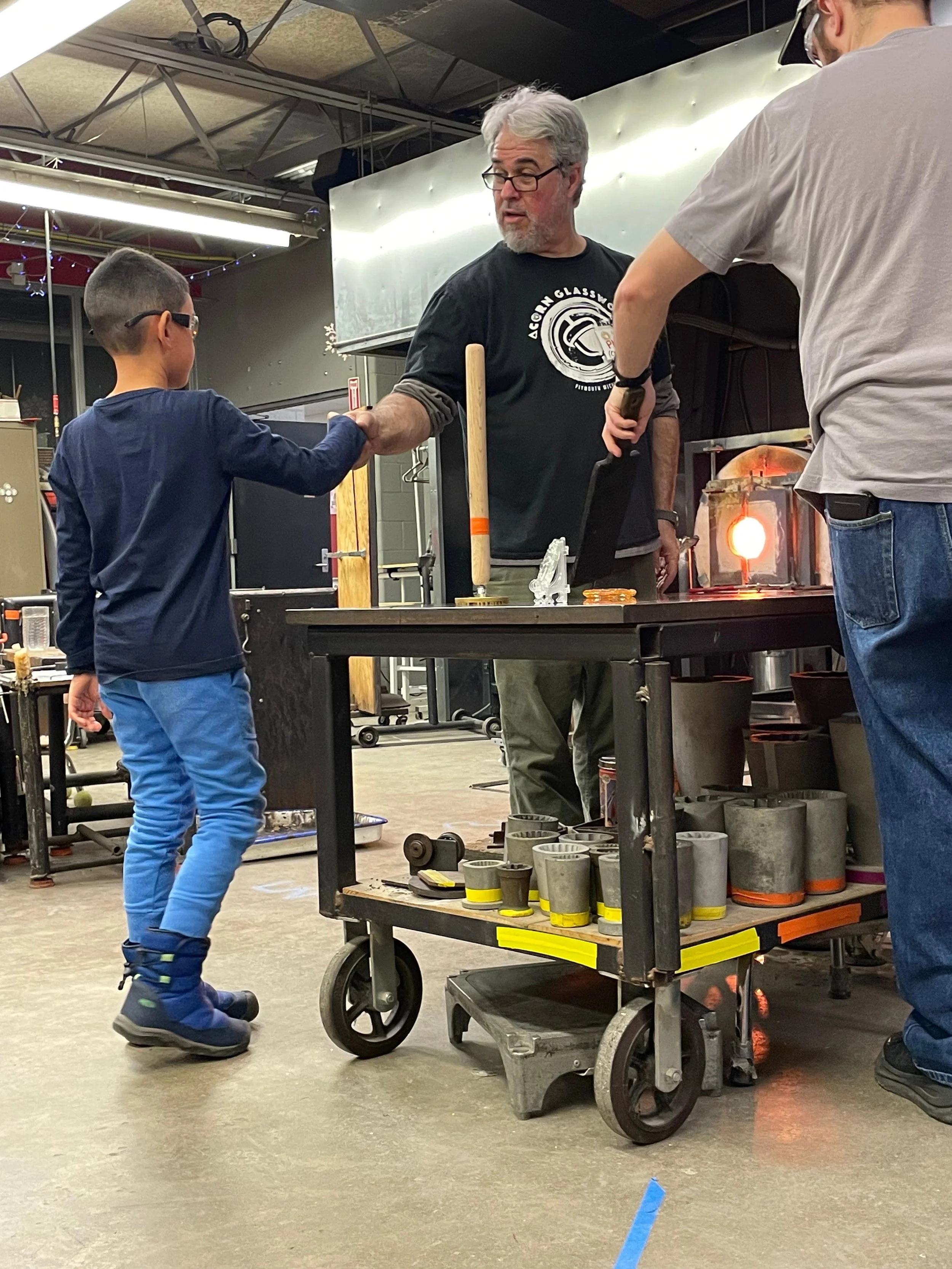
Throughout these experiences, third graders become more confident in their abilities while strengthening collaboration, communication, and friendship.
Children begin to trust themselves as capable, resourceful, and independent learners and community members.
Grade 4
Learning through Connection
Fourth graders embark on an exploration of geography, zoology, and history…
through the stories of the peoples who traveled this land long before us. They explore how human beings are connected to the lakes, rivers, trees, and mountains around them, and learn who walked these lands before us.
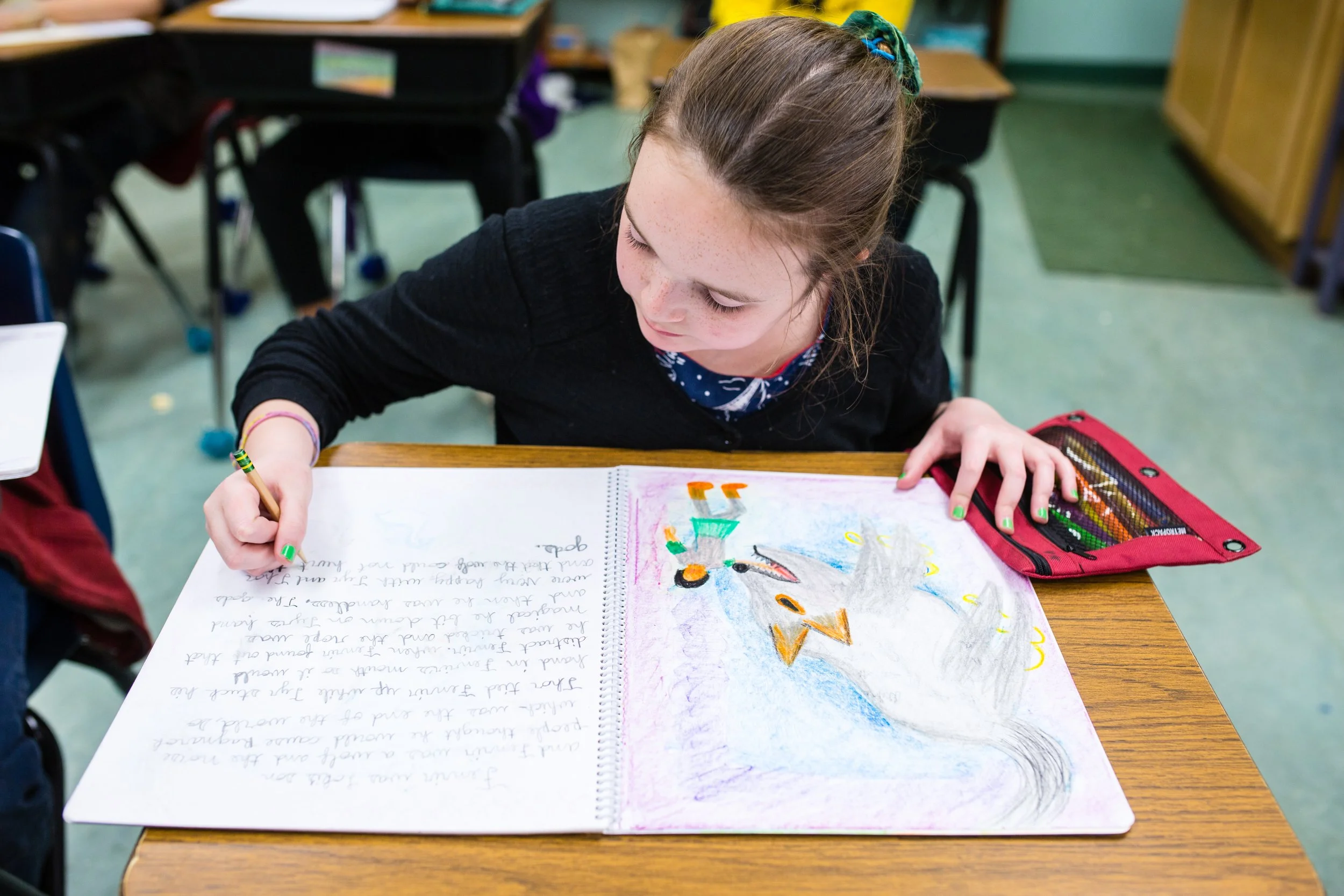
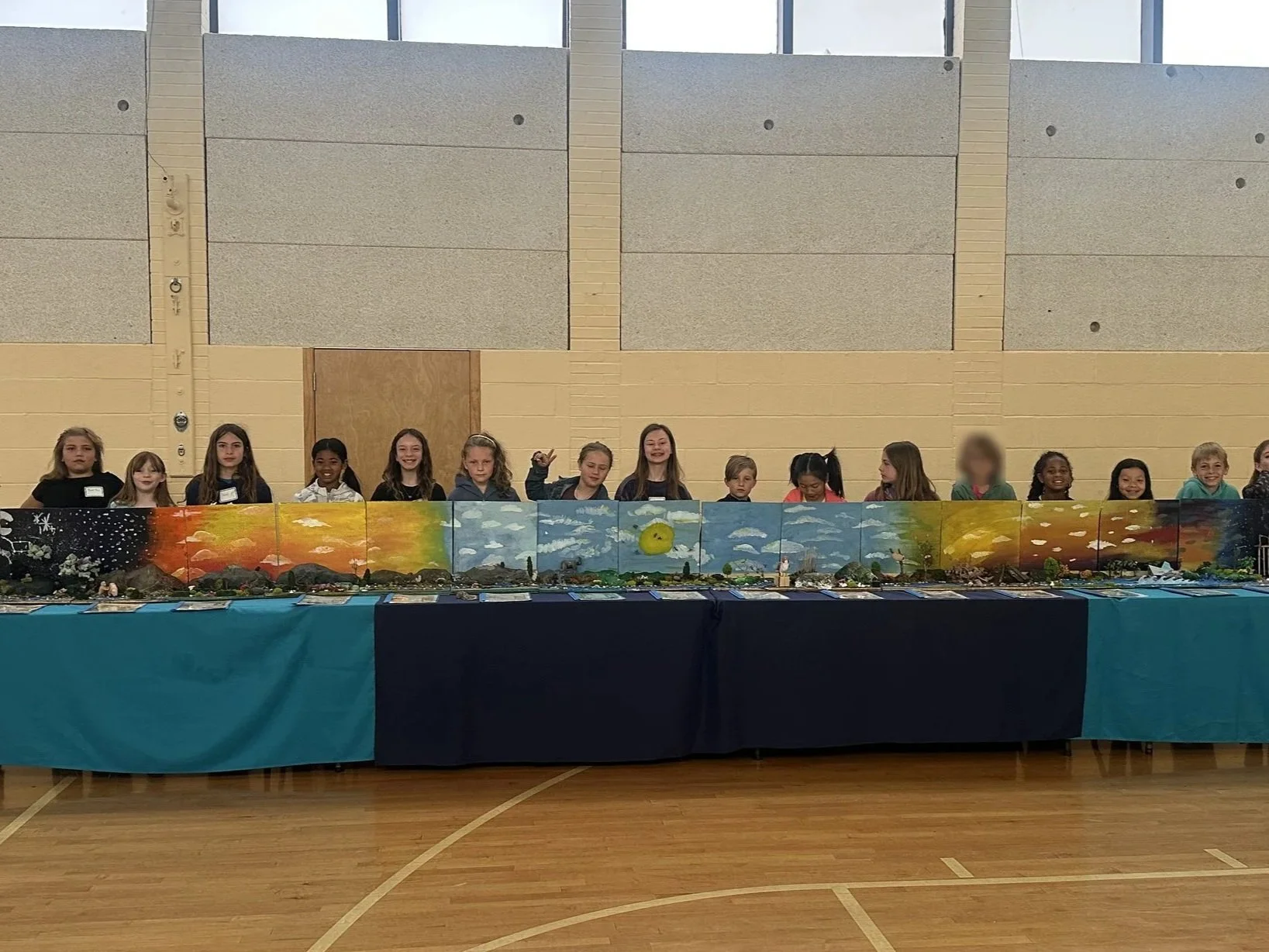
Through stories of previous civilizations, and memorable figures of Norse mythology, students develop a connection with history and geography. They explore our relationship to the animals who share our world with their first independent research project.
Children cultivate a deeper sense of belonging, place, and identity.
Mathematics take on new richness
as students learn to divide the whole into parts through fractions, strengthening and expanding their understanding of the four foundational processes. In music, their voices lift and intertwine in harmonies and rounds, reflecting the growing social awareness and cooperation of the class. Students bring form and beauty into their artwork and sewing projects, crafting pieces that are truly their own.
Creative expression is woven throughout the year.
Grade 5
The Golden Year of Balance and Beauty
Fifth graders stand gracefully between childhood and adolescence…
a time known in Waldorf education known as the Golden Year. Still full of imagination, yet increasingly thoughtful and capable, fifth graders meet a curriculum designed to nurture both beauty and growing intellectual strength.
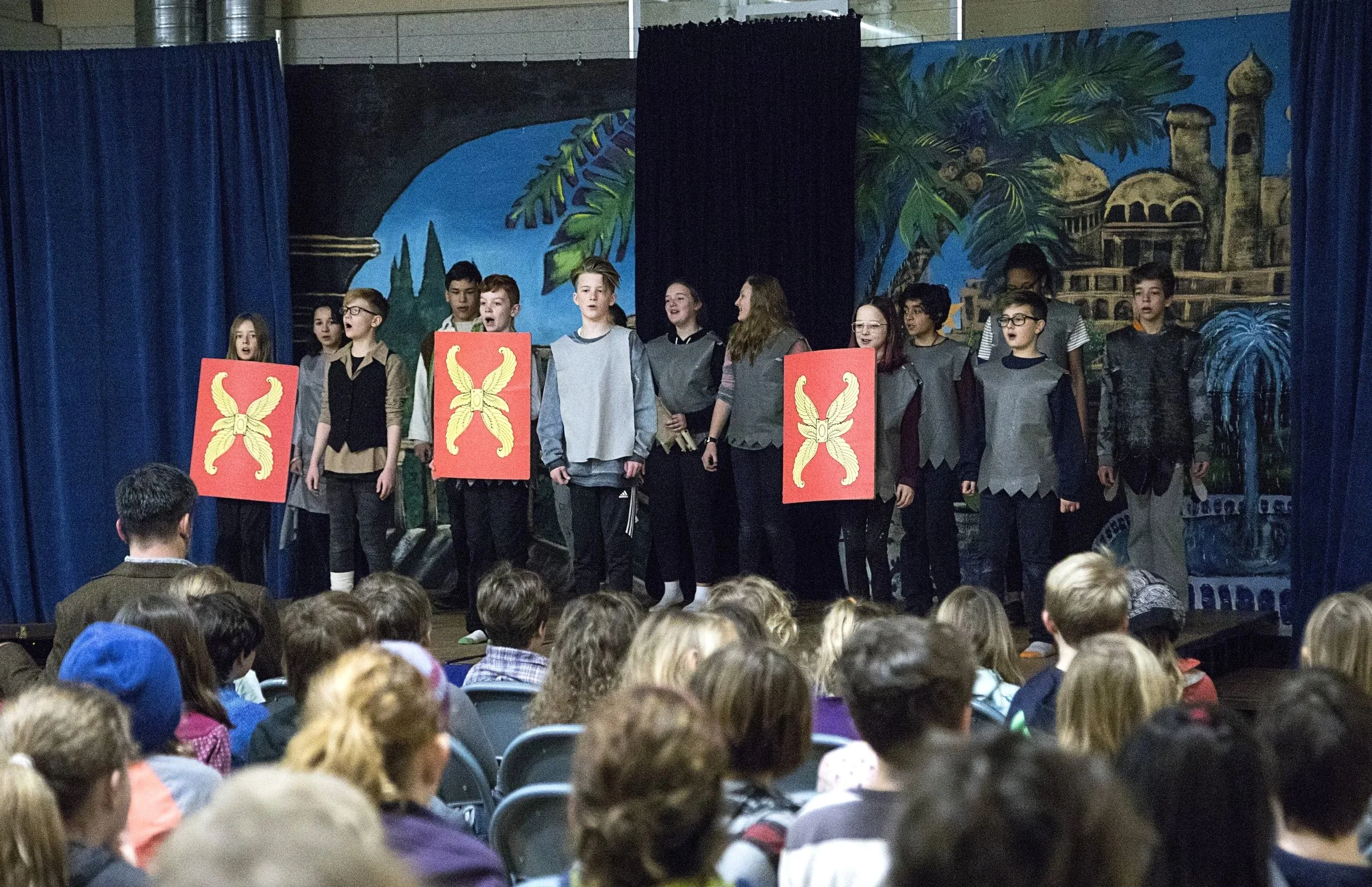
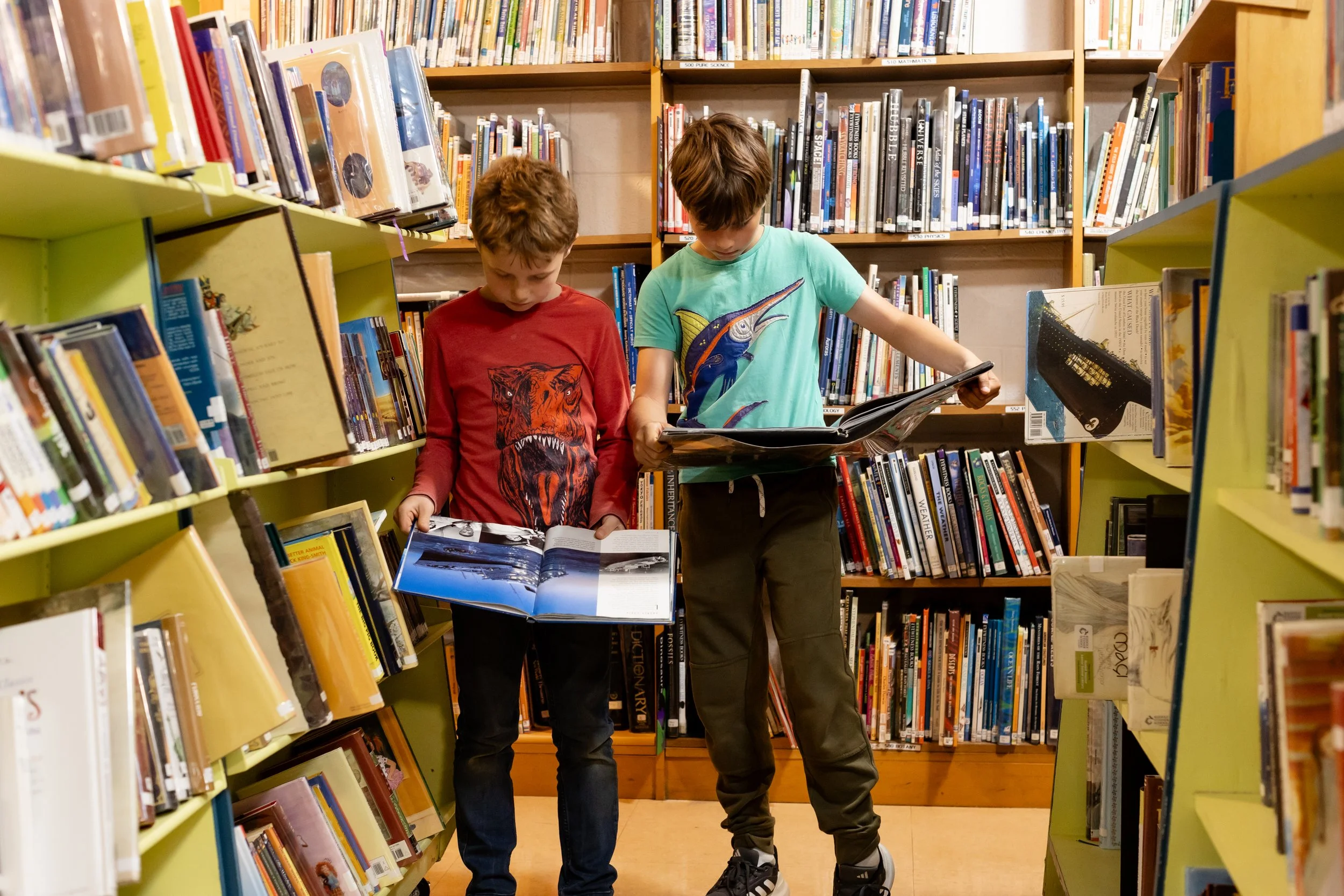
Students explore the ancient civilizations of India, Persia, Mesopotamia, Egypt, and Greece; study North American geography; and discover the harmony of the flowering plant in botany. Mathematics expands through work with fractions and decimals, building confidence and precision. Art, handwork, painting, writing, music, and orchestra enrich learning with creativity and discipline. Social-emotional learning begins formally in Grade 5, helping students navigate friendships, boundaries, and growing independence with confidence and compassion.
The year culminates in the Greek Pentathlon, where students train with intention and experience the joy of athletic excellence and sportsmanship alongside other Waldorf schools.
Throughout Grade 5, children develop poise, curiosity, and a deep appreciation for the order and beauty of the world—and of themselves.