
World Kindergarten Teacher’s Conference
By Angela Gladstone of The Steiner School of Ann Arbor
From April 8th-12th 2026, At the top of Dornach Hill, one thousand early childhood teachers gathered from every continent to share in wisdom and inspiration as we marked the centennial celebration of Waldorf kindergarten at the Goetheanum. The themes of the conference, titled “Kindness, Strength and Love”, were universal to every kindergarten across the world. While the world looks very different than it did 100 years ago, there are many things that are the same throughout time, which Rudolf Steiner gave as his guiding principles of kindergarten education: (1) young children observe the world and absorb it through imitation of those around them, and (2) the teacher’s inner life and practice are a crucial aspect of a strong classroom, as they lay the foundation for human connection, observation, joy and reverence. Our school supported Ms. Anne, Mrs. Abate, and Ms. Angela to attend the conference, and they have continued to share insights and inspirations with us from their time there.
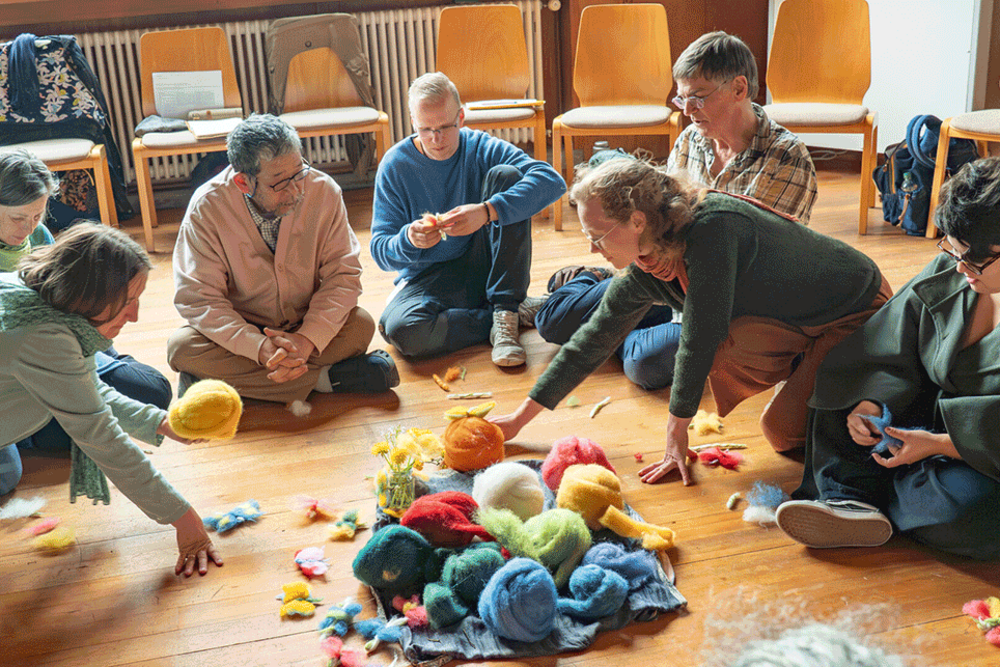
Pictured: Workshop on exploring how the daily work of adults stimulate children’s free play.
Throughout our lives we all contemplate what it means to be a human being. As they begin their lifelong journey of exploring what it means to be human, children look to the adults around them as examples for their experience. Through our actions and communications, children are implicitly and explicitly learning how to treat others, how to care for things, and what is important in life. We learn from them how to continue to love with a completely open heart, how to see the world through their creative eyes and wonder how to support them so that they can be free to bring the impulses of the future, supporting generations to come. One of the presenters shared a story of visiting a kindergarten that had a sign in their garden that said, “We Have Time”, and one of the gifts we value so much as teachers, holding as divine, is the gift of presence.
When we are able to fully see and listen to the human being in front of us, whether that is a student, parent, or colleague, we are engaging in one of the highest and most fulfilling aspects of humanity, and setting an example for the children of what we can all be at our highest potential.
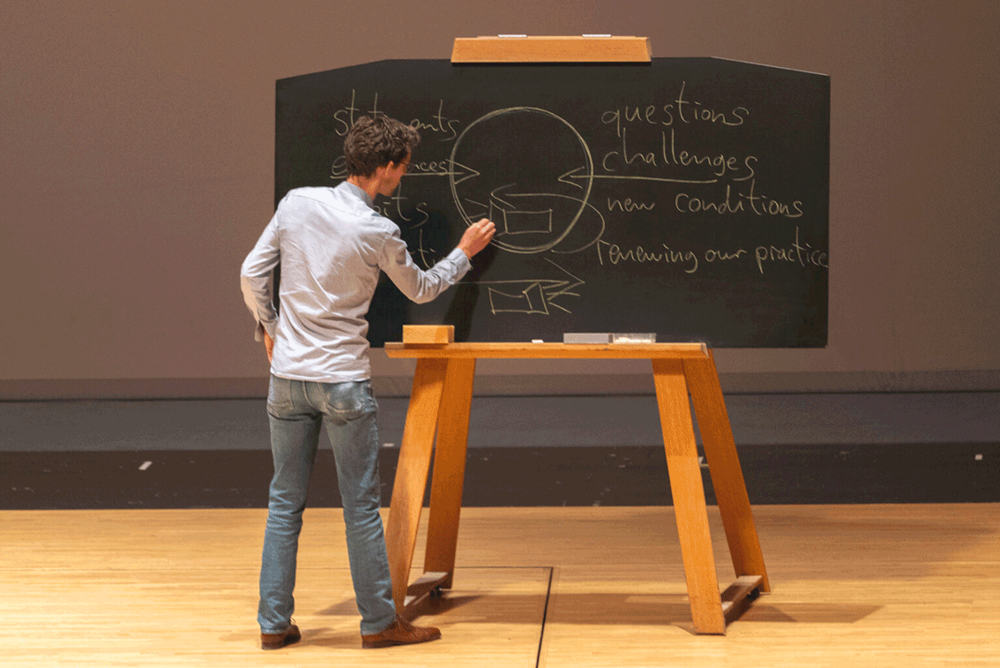
Pictured: Philipp Gelitz, Assistant Professor of Early Childhood Education giving a lecture.
Our teachers receive the children into our classrooms by fulling being present to learning who they are, while trying to simultaneously see where they have come from and all the work they are doing to grow into this world, as well as envision them at their full potential for everything they will bring this world as they grow into human beings that are free and conscious in their deeds, relationships and capacity for deep critical and creative thinking. The human experience is one that strives to balance the paradox of having an individual experience while knowing the capacity to grow and be your best self is essentially tied to your relationship with others and the community- that self and community are reflected in one another and simultaneously both one and separate.
Our teachers also spent time learning from those who are doing “emergency pedagogy” in places that are struck with natural or human imposed disasters, such as stART (providing short term targeted support for areas in need through primarily art and movement) and Just Childhood (providing kindergarten and emergency pedagogy in refugee camps in Lebanon). Both organizations shared about their work to try to restore a sense of stability by providing safer spaces for children, and how movement, art, play and laughter, and human connection have transformative impacts that uplift the human spirit and allow us to help process trauma. The work these organizations are doing was so inspiring to our teachers, and we hope to have continued connection to the worldwide movement of supporting taking care of others in this way. It was an amazing experience to be with so many people, all exploring the essence of welcoming these young souls into the world as we prepare a place for them to be fully seen and a part of a whole.
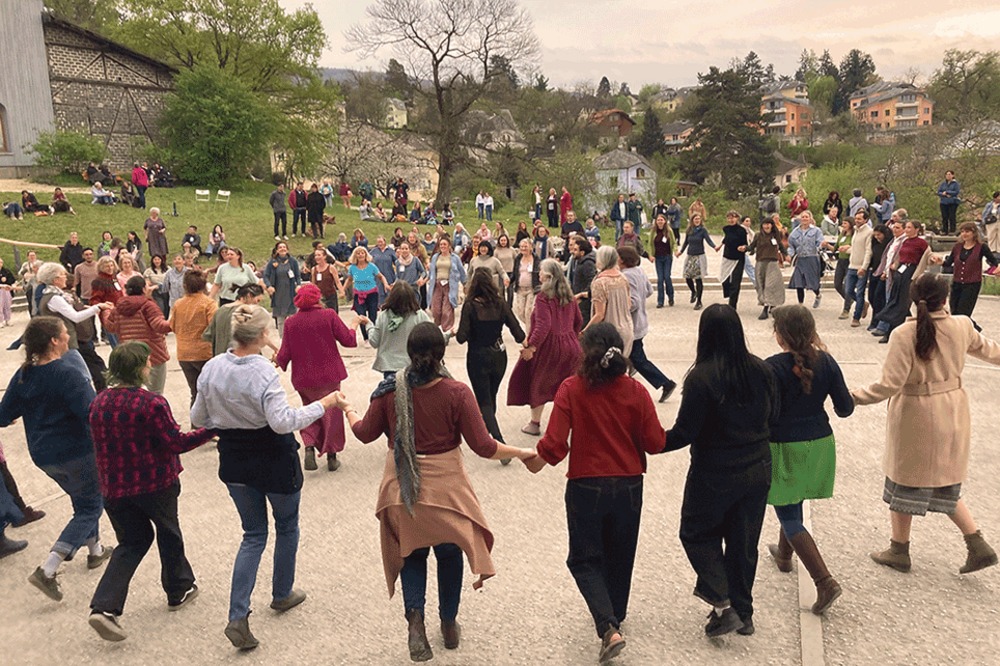
Attendees folk dancing.
References and sources
• Images sourced on Goetheanum Pedagogical Society.
https://www.goetheanum-paedagogik.ch/en/publications/artikel/world-early-childhood-conference-in-pictures
• Goetheanum - School of Spiritual Science and seat of the General Anthroposophical Society
https://goetheanum.ch/en/
• Components of a Positive School Environment (youth.gov / National Center on Safe Supportive Learning Environments)
https://www.justchildhood.org/about-just-childhood/