Student Support in Elementary School
In-Class Support
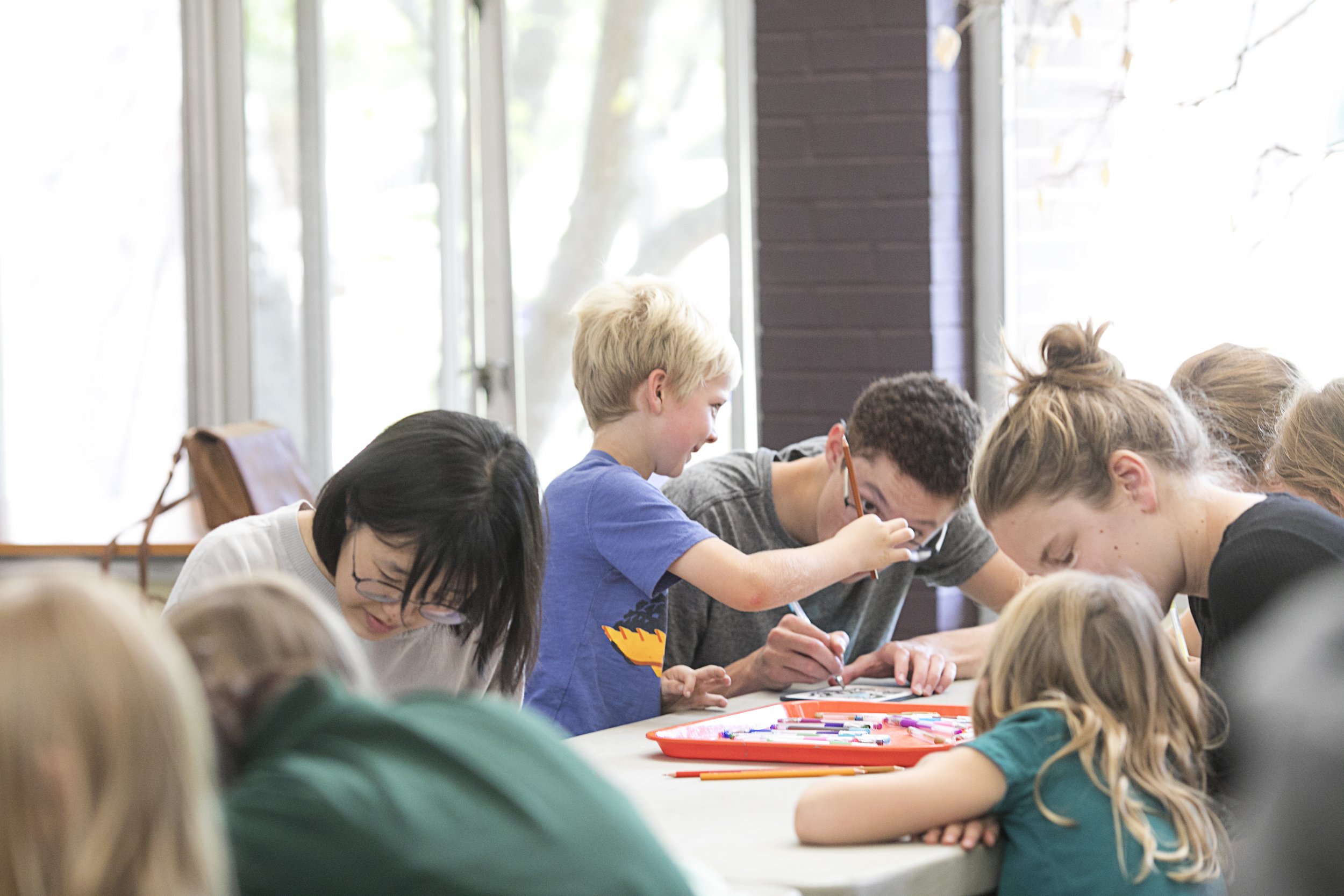
In the classroom, our elementary school teachers are continuously observing and evaluating their students' cognitive, social-emotional, and physical capacities. They are careful to note early indications of learning differences and to support the individual needs of each student. In grades 1-4, classrooms have an assistant teacher, who provides an additional perspective and instructional support to the lead teacher.
Extra Lesson Support
As needed, children in grades 1-5 participate in extra lesson support, which is designed to complement and enhance the core curriculum. This often focuses on kinesthetic and creative activities that integrate body and mind, such as bean bag games or balance activities. Extra lesson support is often provided in small groups; however, particularly in the lower grades (1st and 2nd), the entire class may participate in these activities.
Literacy Support
Fostering a deep lifelong interest in reading and writing is a key goal of our elementary program. All teachers are trained in proven phonics-based multi-sensory structured literacy programs. Additionally, our reading specialist leads breakout groups with children in the classroom. In most cases, children will reach important benchmarks in reading with in-school support; however, our support coordinator will work with families if a child requires additional instruction or tutoring in reading and writing.
Accommodation Plans and Extracurricular Tutoring
At RSSAA, we understand that every child has a unique developmental trajectory, reaching milestones at their own pace. Our teachers are careful observers of their students and will provide reasonable accommodations for children throughout elementary school—for example, providing extra time to complete classwork at home. In the case that a student is consistently struggling to meet developmental expectations, our student support coordinator will work with families and faculty to create an accommodation plan. In some cases, our team will also recommend additional tutoring, occupational therapy, or request additional assessments to gather information from experts in the medical or Anthroposophical realm.
Social and Behavioral Support
Social and emotional well-being is a prerequisite for academic success. Rudolf Steiner School of Ann Arbor strives to create and maintain a culture of safety, kindness, respect, and responsibility by using the Three Care Streams process developed by Kim John Payne, M.ED. Importantly, our school addresses social and behavioral support with the same care, attention, and student-centered processes that guide our learning support. We encourage you to learn more about our holistic approach.